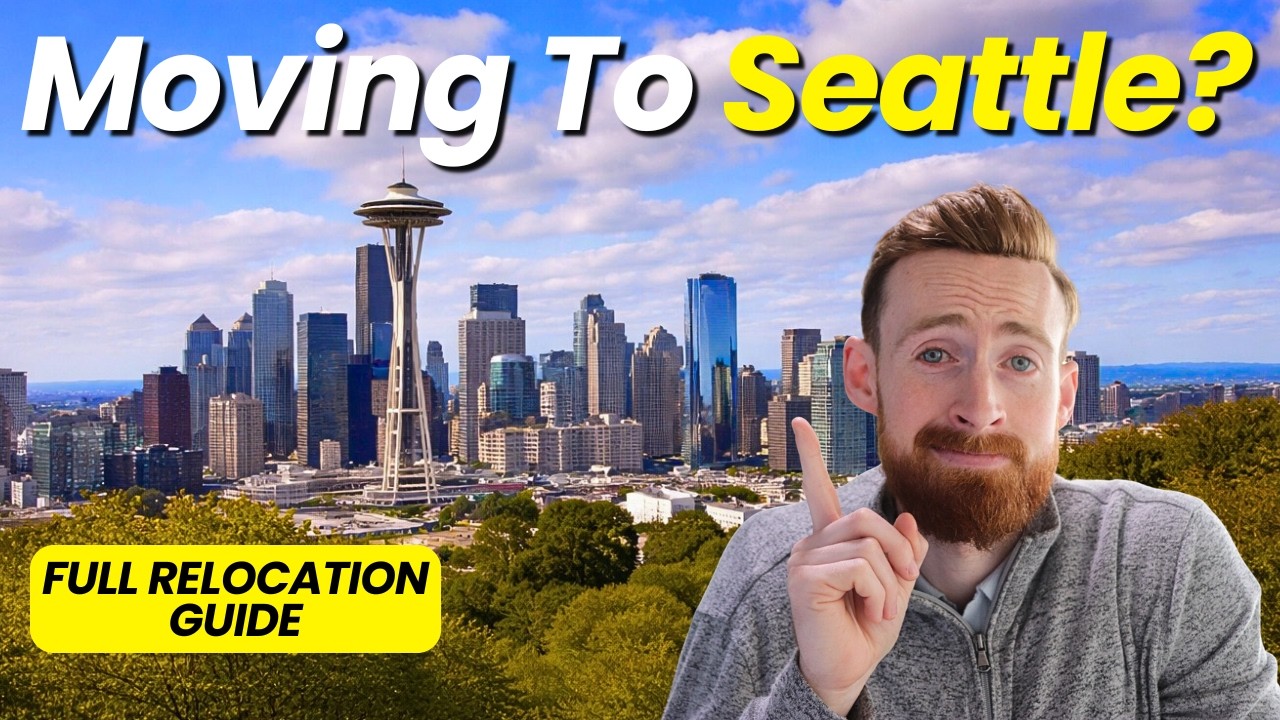
40 Things to Know Before Moving to Seattle in 2026: A Local Realtor's Honest Guide
Before moving to Seattle, know that the city is much more livable than the headlines suggest, the rain is overhyped but the gray winters are real, traffic and housing costs are high, and there is no state income tax but sales tax runs around 10%. I've lived in the Seattle area nearly my whole life and help people relocate here every week, so here are the 40 things I walk my relocation clients through before they move.
By Bryce Greenleaf, Seattle-area Realtor and relocation specialist · Updated October 2026
Quick answer: the Seattle area at a glance
- Metro size: 75+ cities and towns and over 4 million people across King, Snohomish and Pierce counties.
- Most expensive area: the Eastside (Bellevue, Redmond, Kirkland, Sammamish, Issaquah).
- Weather: about 38-39 inches of rain a year (close to the national average), roughly 5 inches of snow, summer highs in the mid-to-upper 70s.
- Taxes: no state income tax; sales tax around 10% depending on the city.
- Watch-outs: heavy traffic, limited new construction, many older homes without air conditioning, and long gray winters.
Is Seattle a safe and good place to live?
For most people, yes. Here is what to know about the city itself.
- Don't judge Seattle by the headlines. The news coverage is not representative of the whole city. Neighborhoods like Queen Anne, Magnolia, West Seattle and Green Lake are places people love to call home.
- Homelessness and public drug use are concentrated, not everywhere. These issues are mostly in and near downtown, and they tend to spread more toward the south side of the city than the north. Most Seattle neighborhoods, and most suburbs, don't deal with them in the same way.
- The suburbs are plentiful. You can stay in King County, go north to Snohomish County, or go south to Pierce County. The metro has more than 75 cities and towns and over 4 million people, so there's a lifestyle for almost everyone.
- There are semi-rural towns you can still commute from. If you want acreage (1, 5, 10 or 15-acre parcels) and a small-town feel, look at Duvall, east of Bellevue and Redmond, or Snohomish, which has a great historic downtown.
- Seattle isn't the only urban core. Bellevue is about 10 miles east across Lake Washington. Seattle feels older, artsier and more cultural; Bellevue feels more polished and a bit more "bougie," with very clean streets and fewer of downtown Seattle's issues. Visit both if you want high-rise, walkable living.
| Downtown Seattle | Downtown Bellevue | |
|---|---|---|
| Vibe | Older, artsy, strong culture | Newer, polished, more upscale |
| Street conditions | Some areas affected by homelessness and drug use | Very clean; doesn't share those issues |
| Trade-off | More character and nightlife | Can feel a bit sterile, less arts culture |
What kind of homes can you buy in the Seattle area?
- New construction is limited. Seattle proper has almost no open land, so new builds are mostly infill townhomes, condos and one-off houses. The suburbs have more, but nothing like the sprawling subdivisions in Texas, Florida or Arizona.
- Architecture varies widely. You'll find homes from the late 1800s and early 1900s through brand-new builds: craftsman, colonial, Victorian, mid-century modern, and suburban neighborhoods built from the 1970s through the 2010s.
- Master-planned communities are rare. There are none in Seattle proper. The main options are Ten Trails in Black Diamond, which has been building out for over a decade, and Tehaleh near Bonney Lake, currently the most popular, with five or six builders. Tehaleh is a tough commute to Seattle or Bellevue, so it works best if you aren't tied to an office.
- The Eastside is the most expensive area. Bellevue, Redmond, Kirkland, Sammamish and Issaquah have the best access to jobs, top schools and shopping, and have seen the most growth over the last decade.
- Suburban growth continues. Lynnwood, for example, has two new mixed-use shopping districts planned near its new light rail station, and similar projects are happening across the metro.
- North and south feel different. Outside Seattle and the Eastside, many buyers who explore both Snohomish County (north) and South King or Pierce County (south) end up preferring the north side. There are great and not-so-great pockets in both, so tour them in person.
How bad is traffic in Seattle, and how do people commute?
- Light rail keeps expanding. As of January 2026, it runs north to Mountlake Terrace and Lynnwood (eventually Everett), south past the airport to Federal Way, and on the Eastside between Bellevue and Redmond, and now over Lake Washington from Seattle to Bellevue.
- Traffic is rough. A recent study put the Seattle area in the top 10 for traffic. Seattle sits in a narrow strip between Puget Sound and Lake Washington, so there's little room for highways. Judge a commute by drive time, not miles; 20 to 25 miles can mean a long trip.
- Don't rely on ferries for a daily drive-on commute. Walking or biking onto a ferry from Kitsap County towns like Kingston, Poulsbo or Port Orchard works, but driving on every day means long waits and boats out of service. I've waited an hour just to board.
Is the Seattle area good for families?
- Good schools are spread around the region. Bellevue, Kirkland, Redmond, Woodinville, Issaquah, Sammamish and Mercer Island often have the highest-rated schools in the state, and there are strong public and private options throughout the metro.
- Youth sports culture is strong. Indoor and outdoor leagues for boys and girls are everywhere, in the city and the suburbs.
Does it really rain all the time in Seattle?
- The rain is overhyped. Seattle gets about 38-39 inches a year, right around the national average; some cities get 50-60. We get more days of light, misty drizzle, not more total rain.
- The gray is the real challenge. Seattle is one of the cloudiest US cities, with 7-8 months of long gray stretches. Some people struggle with seasonal depression.
- Winter days are short. In December and January it gets dark around 4 p.m.
- Summers are close to perfect. Average highs are in the mid-to-upper 70s, rarely over 90, and almost never triple digits.
- Extreme weather is rare. Winter highs average in the low to mid-40s. Nights dip below freezing fairly often, but it's not a brutally cold climate, and people are outside year-round.
- Snow is minimal. The area averages about 5 inches a year. When it does snow, the city can shut down for two to four days because there aren't many plows. As of this filming in late January 2026, we'd only had one light dusting that winter; the last real snowstorm brought 4 to 7 inches two winters earlier.
| Seattle-area weather | Typical |
|---|---|
| Annual rainfall | About 38-39 inches |
| Annual snowfall | About 5 inches |
| Summer highs | Mid-to-upper 70s, some low 80s |
| Winter highs | Low to mid-40s |
| Winter sunset (Dec-Jan) | Around 4 p.m. |
What is there to do outdoors around Seattle?
- Puget Sound views are everywhere. Up and down the metro, many neighborhoods have homes with breathtaking water views.
- The beaches are great, even if most are rocky. For a sandy beach, head to Alki Beach in West Seattle.
- Ferries reach great weekend destinations. The Kitsap and Olympic peninsulas, the San Juan Islands and Victoria, BC.
- Lakes are everywhere. Lake Washington, Lake Sammamish, Lake Stevens and many smaller lakes offer boating, wakeboarding, fishing, and lakeside parks with swim areas for kids.
- River recreation is close. Float or raft the Snohomish, Stillaguamish, Snoqualmie or Skykomish rivers.
- Mountains are in every direction. Stevens Pass, Snoqualmie Pass, Mount Baker, Mount Rainier, Crystal Mountain and the Olympics for hiking, skiing, snowboarding and camping.
- Hiking trails are inside the metro. Many neighborhoods are 10 to 15 minutes from a local trailhead.
- Seattle is very dog friendly. Lots of breweries and restaurants welcome dogs, there are plenty of dog parks, and most downtown condo buildings allow pets.
- Weekend getaways are easy. The Washington and Oregon coasts, Leavenworth (a Bavarian-style town that's gorgeous at Christmas), Lake Chelan, and Vancouver, BC are all a drive away.
What else should you know about daily life in Seattle?
- There are two airports. Sea-Tac is the major international hub; plan extra time. Paine Field in Everett, next to Boeing, is much smaller and usually far quicker to get through than Sea-Tac, with about 10 or 11 mostly West Coast destinations such as California cities, Phoenix, Las Vegas and Honolulu. No international flights.
- Many homes don't have air conditioning. A stat from around 2018-2019 put AC at only about 44% of Seattle-area homes. That's higher now, but expect roughly half of resale homes to lack AC, and budget for adding it if it matters to you.
- The coffee culture is great, and it isn't about Starbucks. Local roasters are everywhere, and drive-thru espresso stands seem to be on every corner.
- Restaurants are strong in the city and improving in the suburbs. Seafood, sushi, Chinese, Italian and steakhouses are easy to find. Sit-down Mexican food is a weak spot; I usually head to a taco truck.
- The job market is strong. Microsoft, Amazon, Google, Meta, Apple and TikTok all have a presence, plus aerospace, healthcare, finance and maritime. Recent tech layoffs at Amazon and Microsoft are worth watching, but the 10-20 year trend has driven the region's growth.
- There's no state income tax. Many of my clients relocate from the LA area and the Bay Area, keep a comparable salary, pay no state income tax and find home prices friendlier.
- Sales tax is high. It varies by city but runs around 10% across the metro.
- The sports scene is one of the best in the country. Seahawks (and the 12th Man), Mariners, Sounders, Storm, Kraken, plus University of Washington college sports.
- People are friendlier than the "Seattle freeze" suggests. Once you plug into school communities, kids' sports, or clubs for running, climbing, pickleball, hiking, kayaking or skiing, it's easy to build a community.
Frequently asked questions about moving to Seattle
Is the rain in Seattle as bad as people say?
No. Seattle gets about 38-39 inches of rain per year, roughly the national average. It rains on more days, but usually as light drizzle. The long stretches of gray, cloudy weather for 7-8 months of the year are the bigger adjustment for most newcomers.
What is the most expensive area around Seattle?
The Eastside, which includes Bellevue, Redmond, Kirkland, Sammamish and Issaquah. It is the most expensive and most in-demand part of the metro because of its job access, highly rated schools and shopping.
Does Washington have a state income tax?
No. Washington has no state income tax, which is a major draw for people relocating from states like California. Sales tax is high, though, at around 10% in most Seattle-area cities.
Do Seattle homes have air conditioning?
Many don't. If you are shopping resale homes, expect roughly half to lack AC. Some owners have added it after construction, so it's worth budgeting for if central air matters to you.
Can you commute to Seattle by ferry?
Walking or biking onto the ferry works well, but driving onto a ferry every day is difficult because of long wait times and boats that are often out of service. Most people shouldn't plan a daily car commute around the ferry system.
Are there master-planned communities near Seattle?
Very few. The main options are Ten Trails in Black Diamond and Tehaleh near Bonney Lake. Tehaleh in particular is on the far south end of the metro and a tough commute to Seattle or Bellevue.
About the author
Bryce Greenleaf is a lifelong Seattle-area resident and licensed real estate broker with more than 10 years of experience. He specializes in helping people relocate to Seattle and the greater Seattle metro, and shares neighborhood guides on his YouTube channel, Living In Seattle.
Thinking about moving to Seattle and not sure which area fits your commute, budget and lifestyle? Schedule a call with Bryce, call or text (425) 598-6607, or email Bryce@livinginseattlemetro.com.
Categories
Recent Posts